 Image 1 of 3
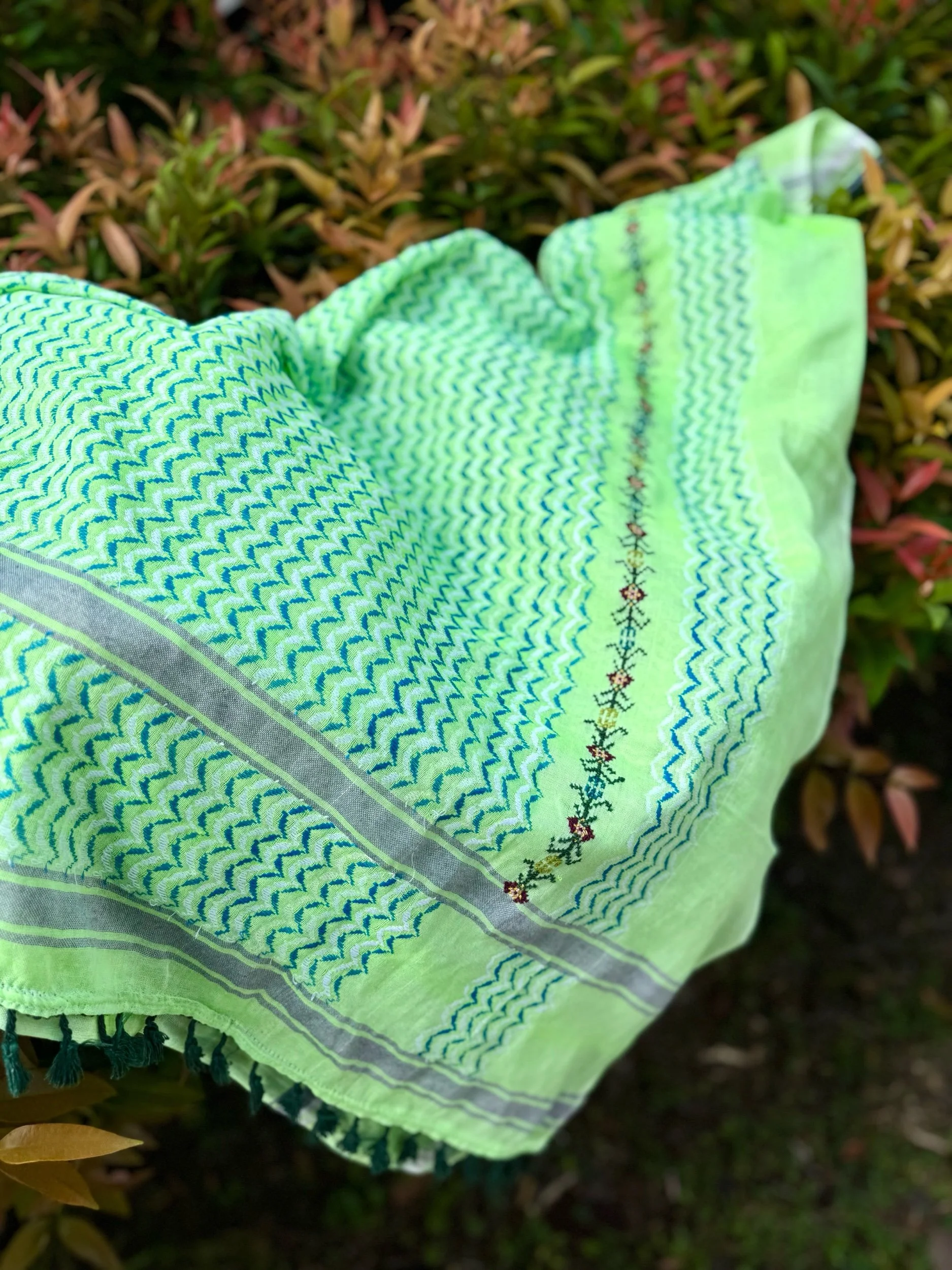 Image 2 of 3
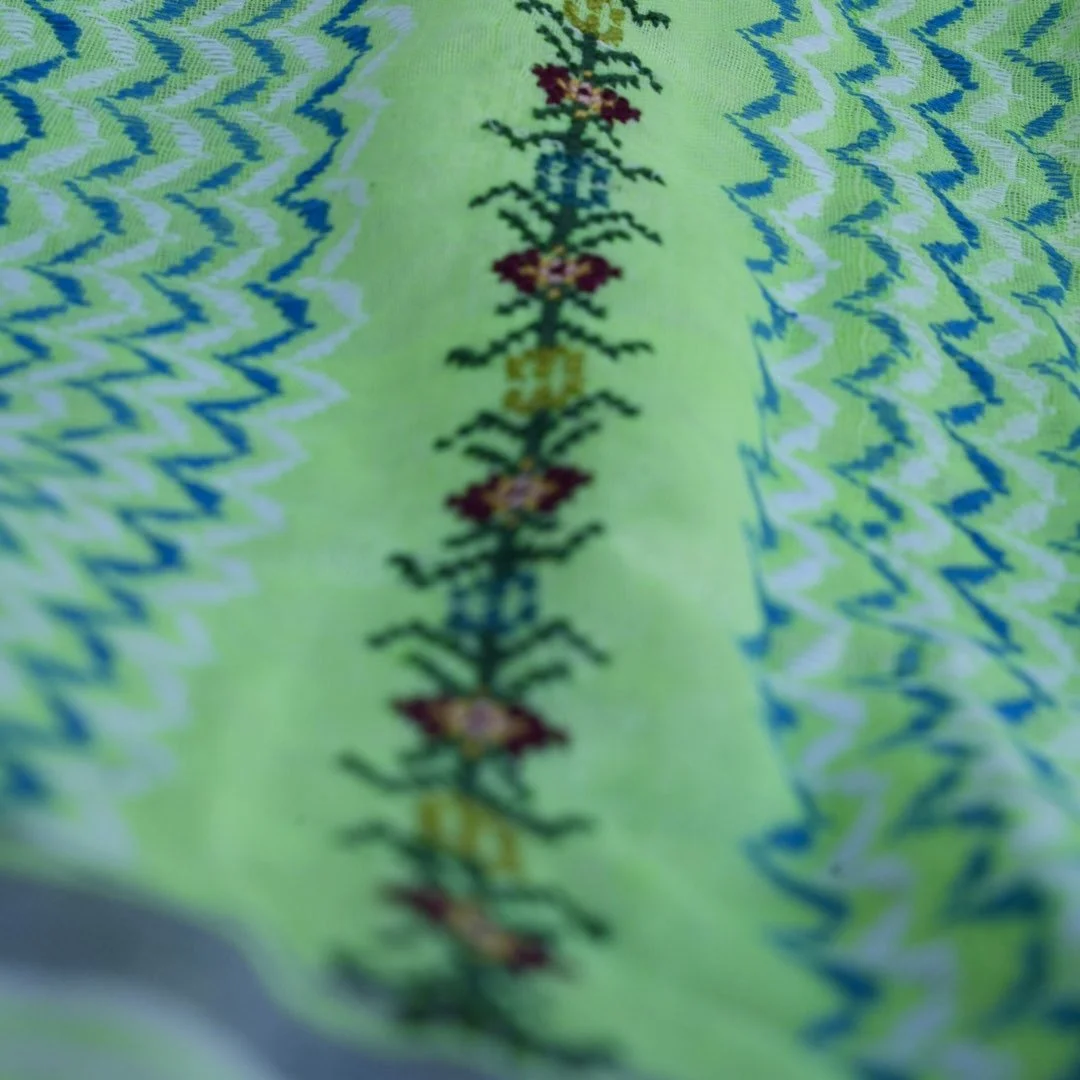 Image 3 of 3
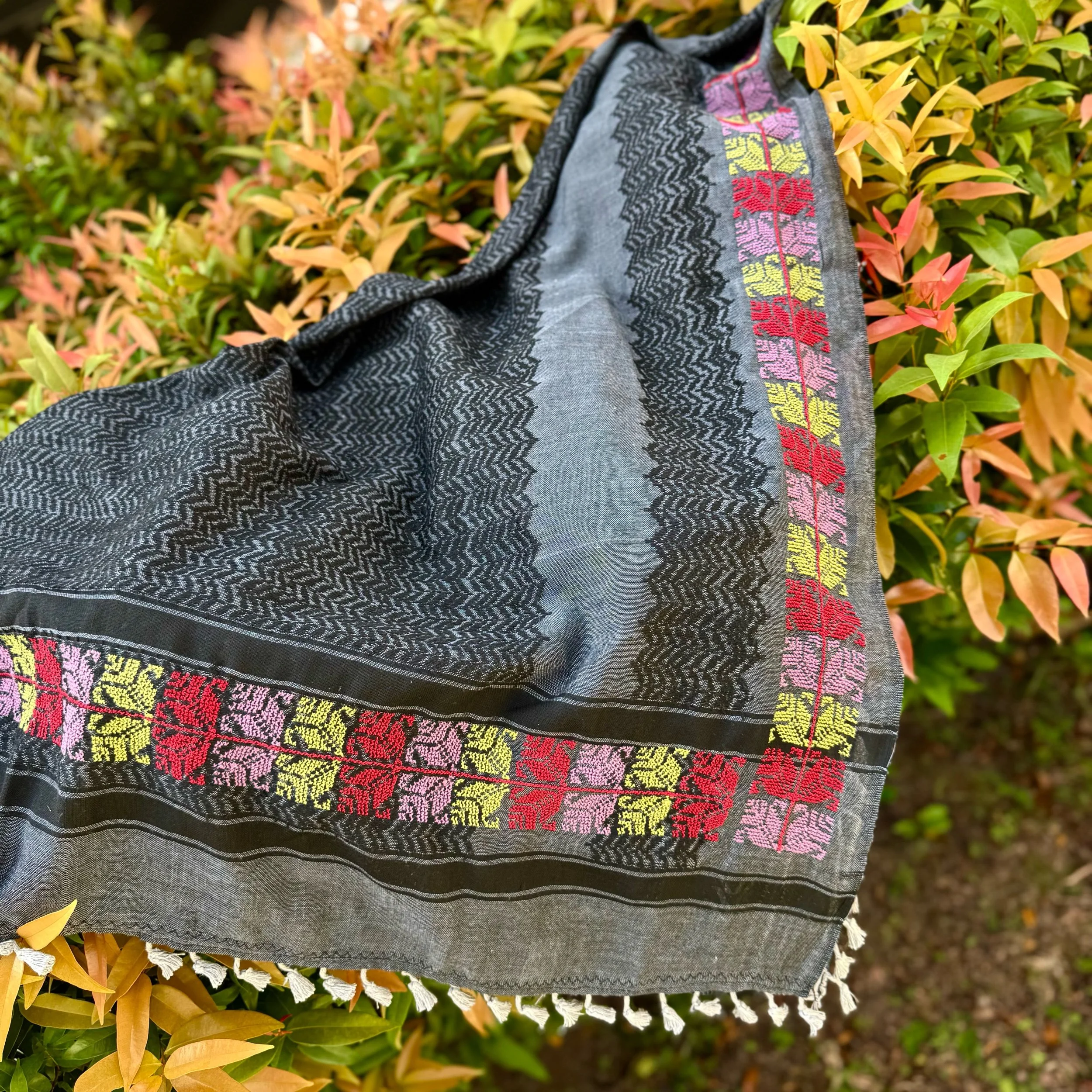
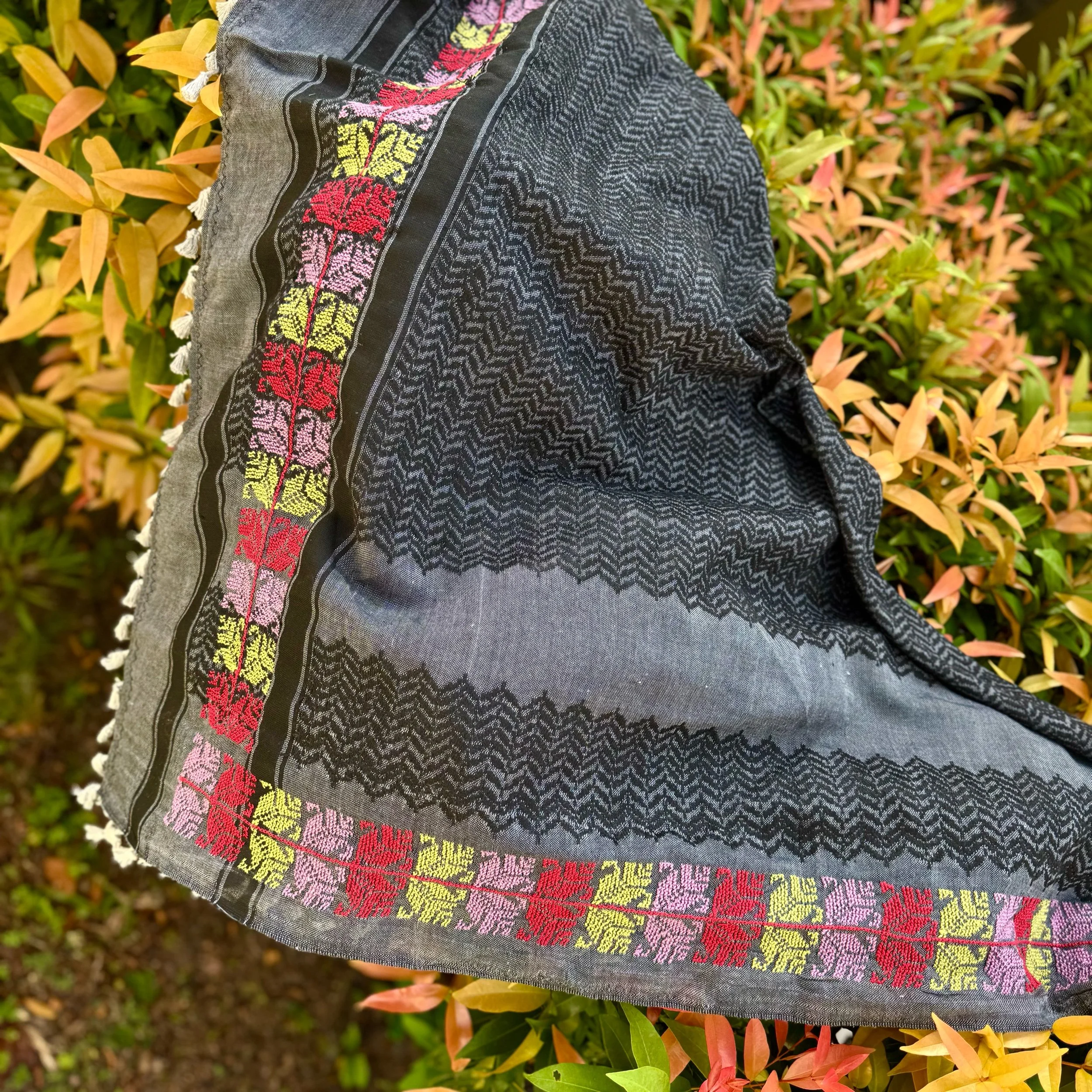
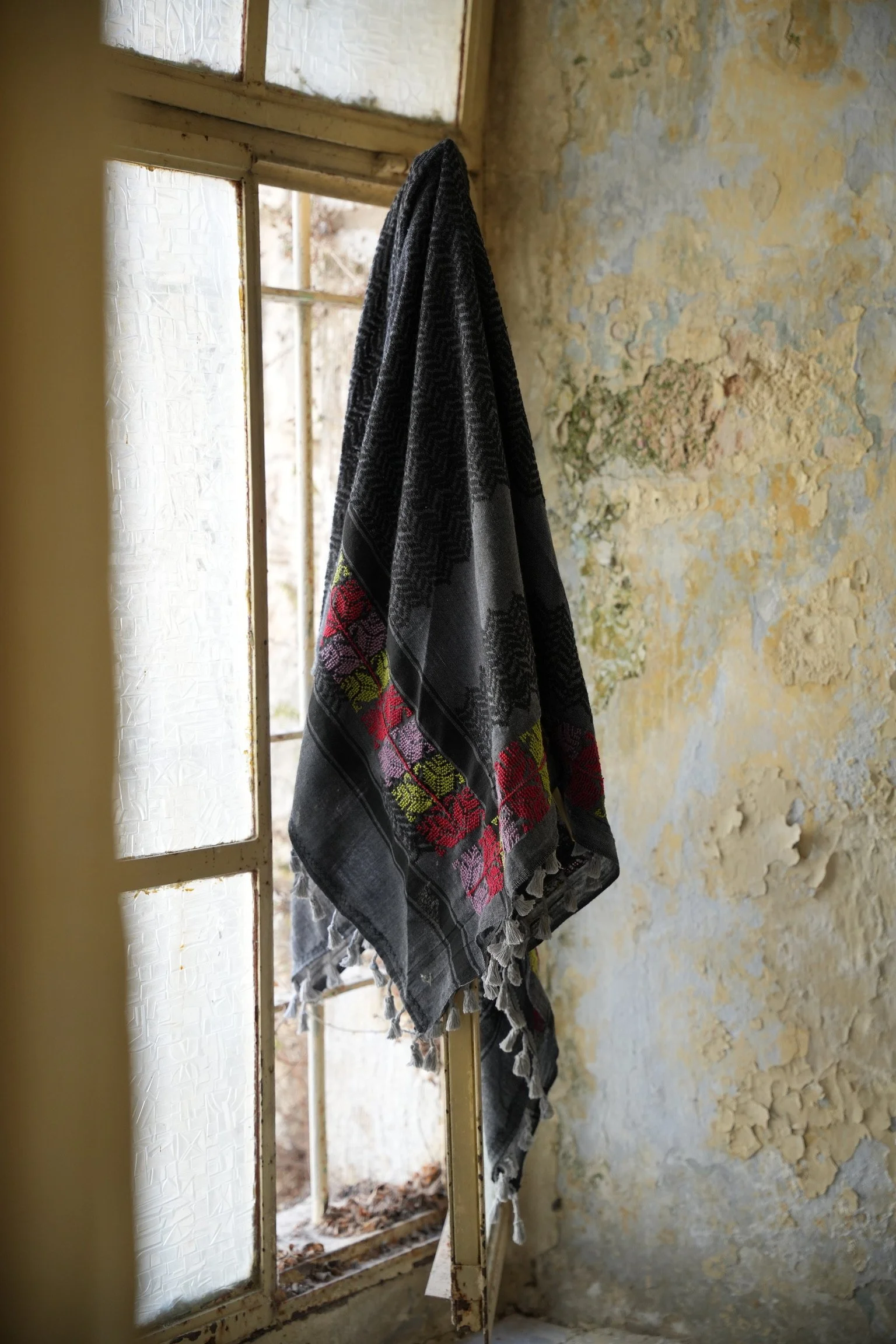
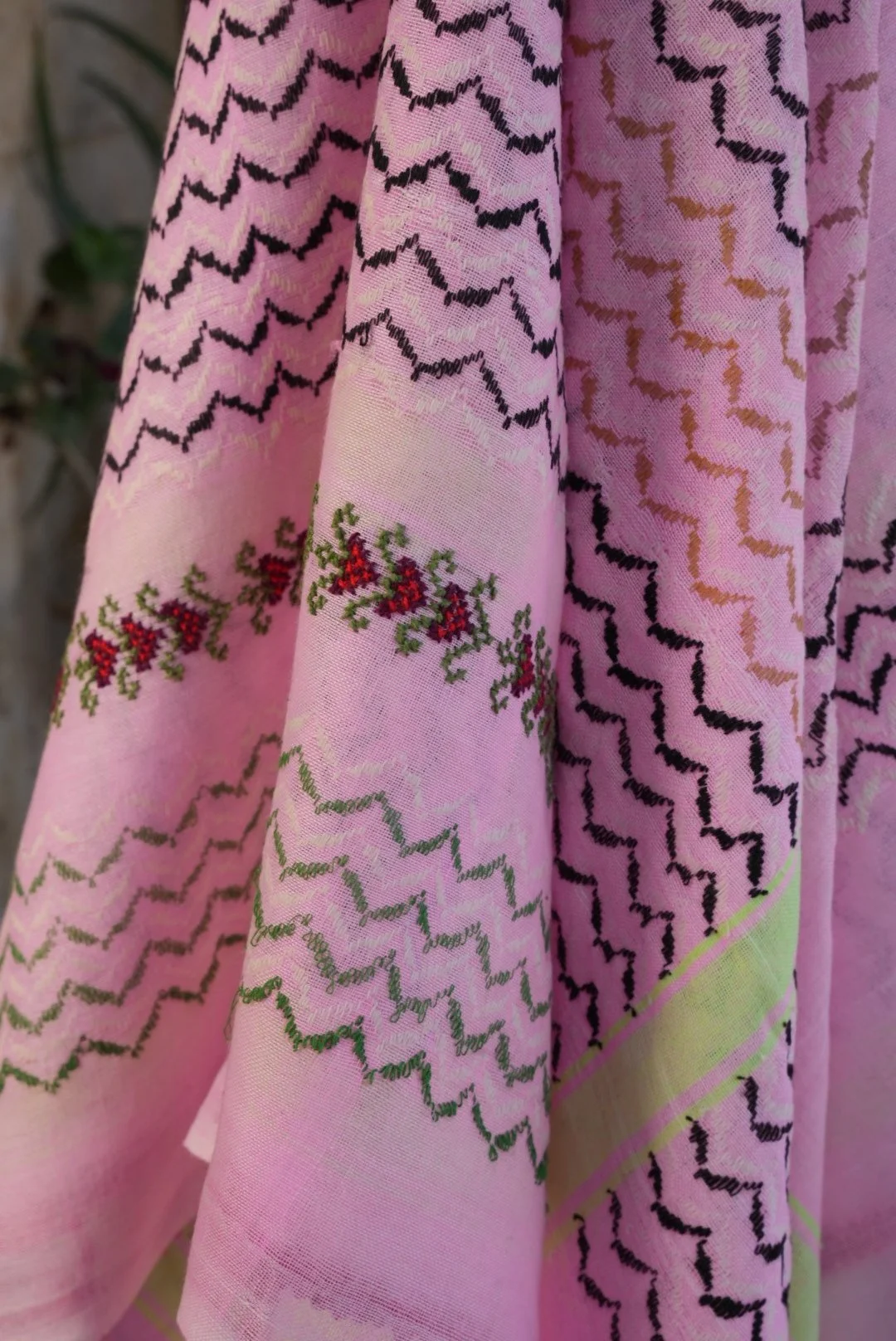
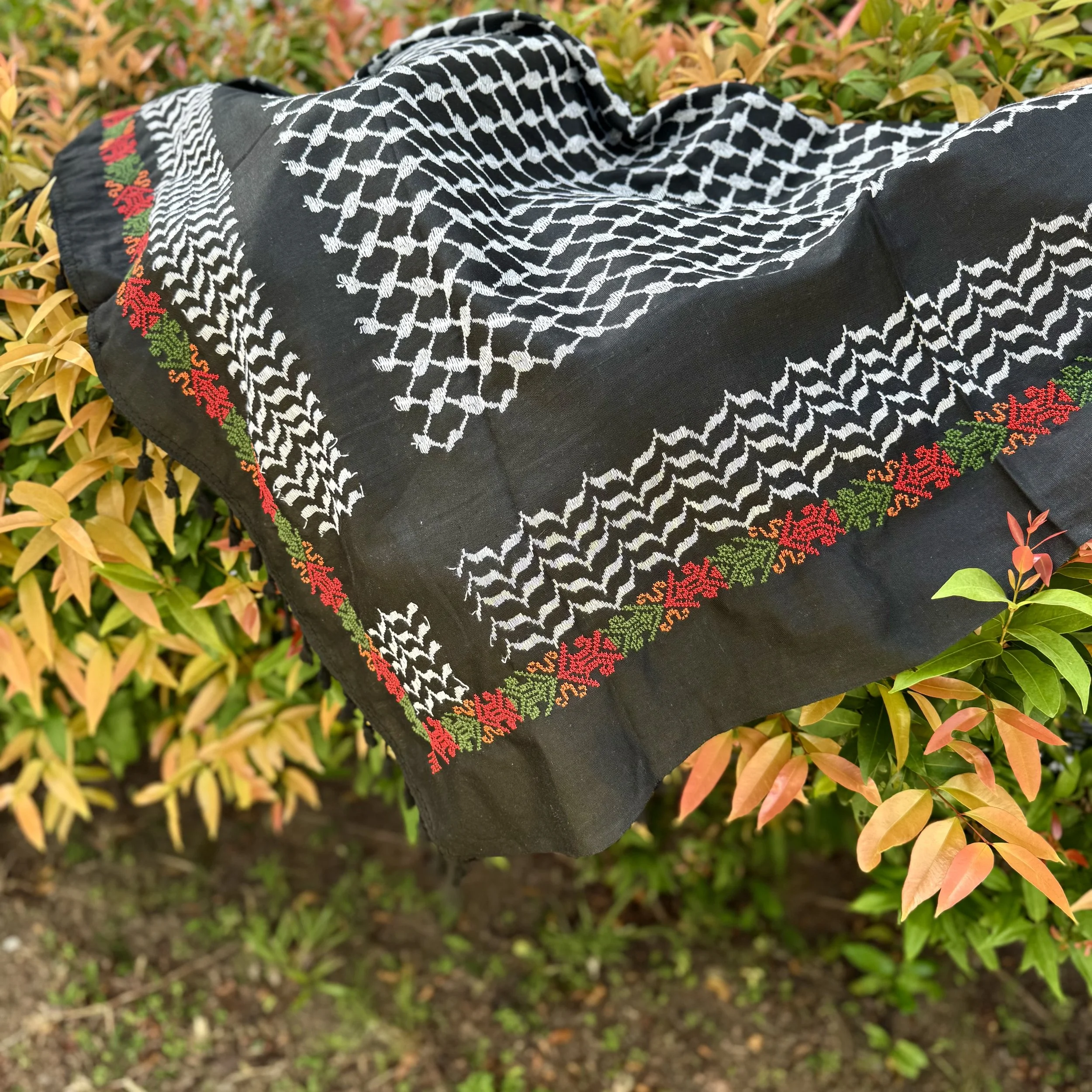
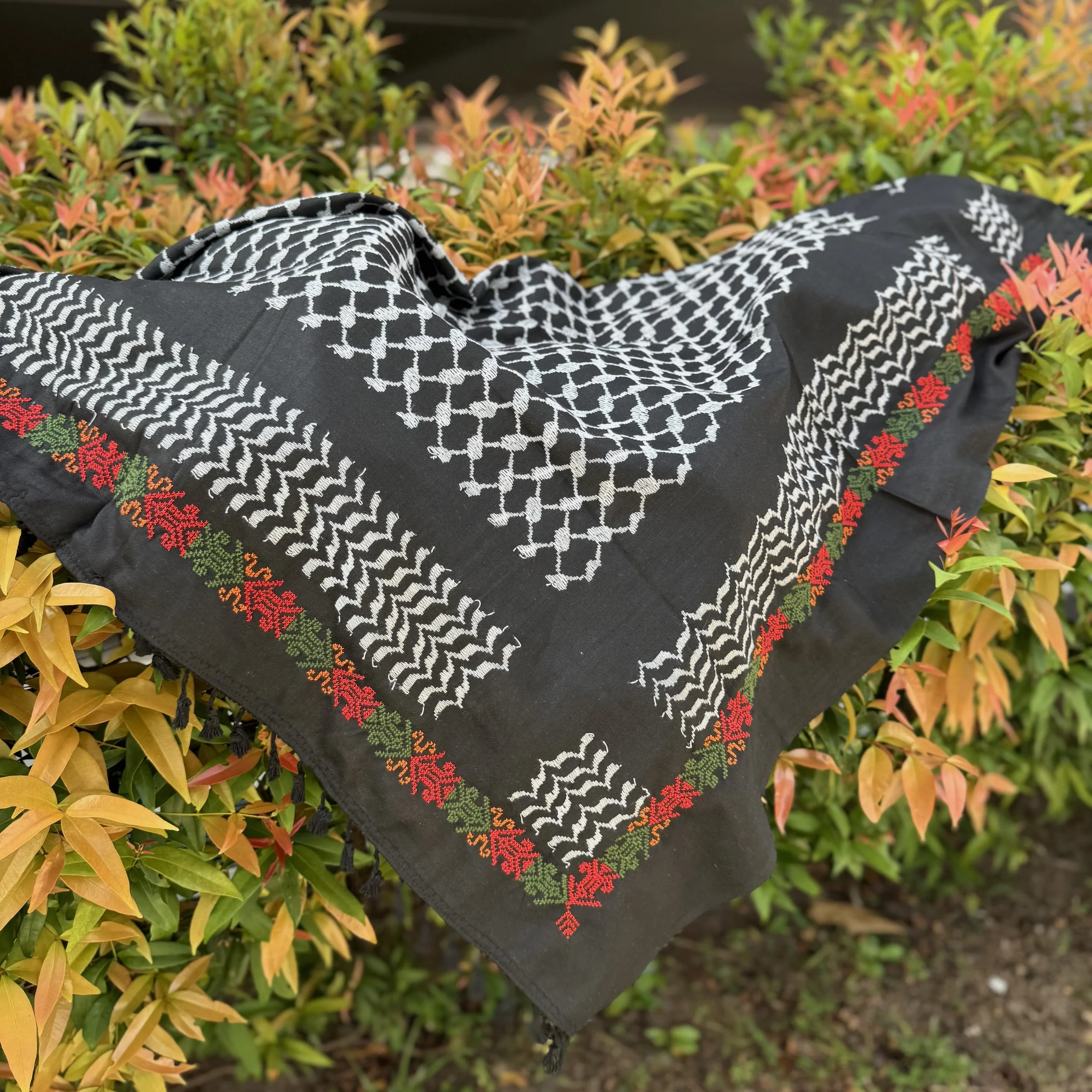
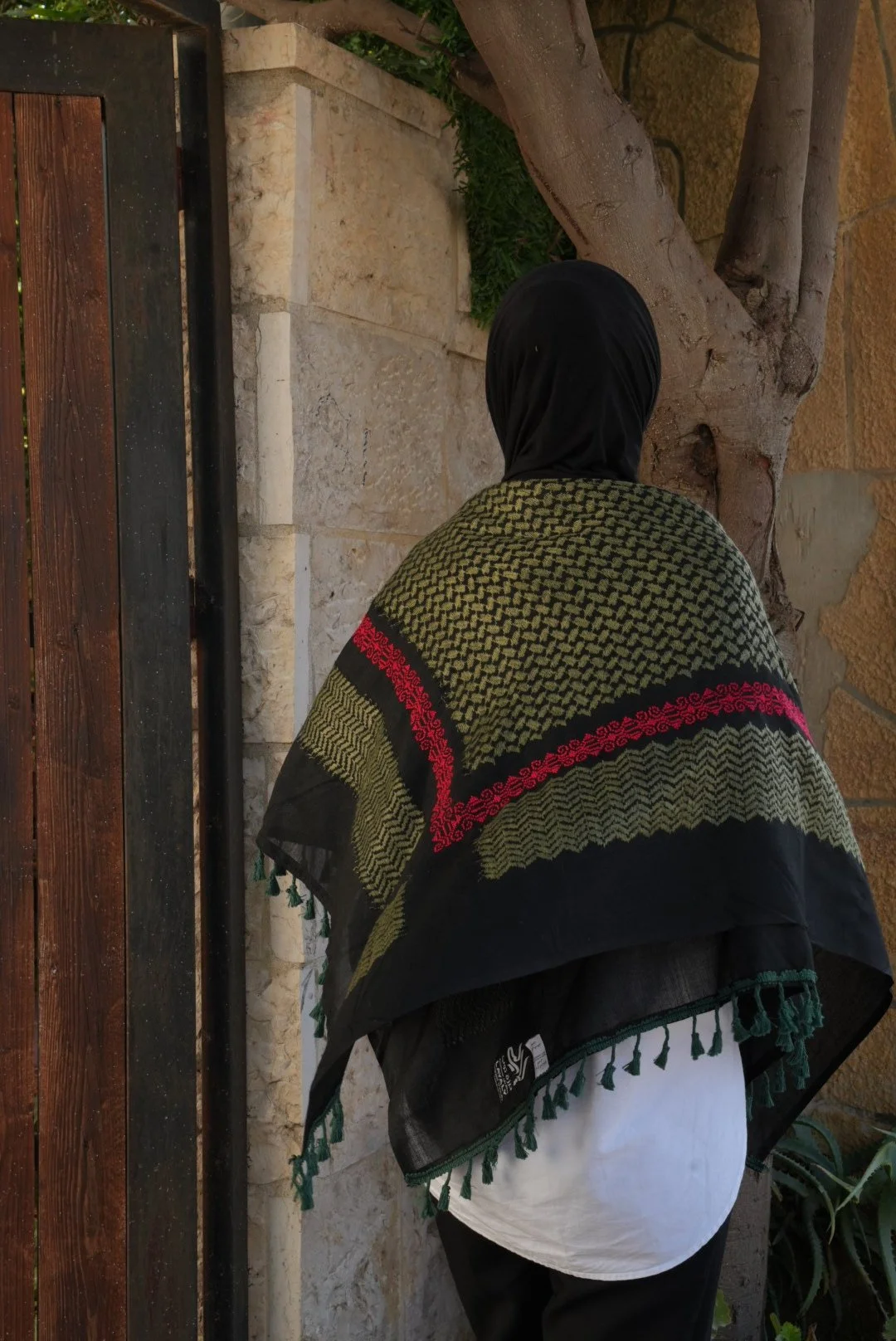
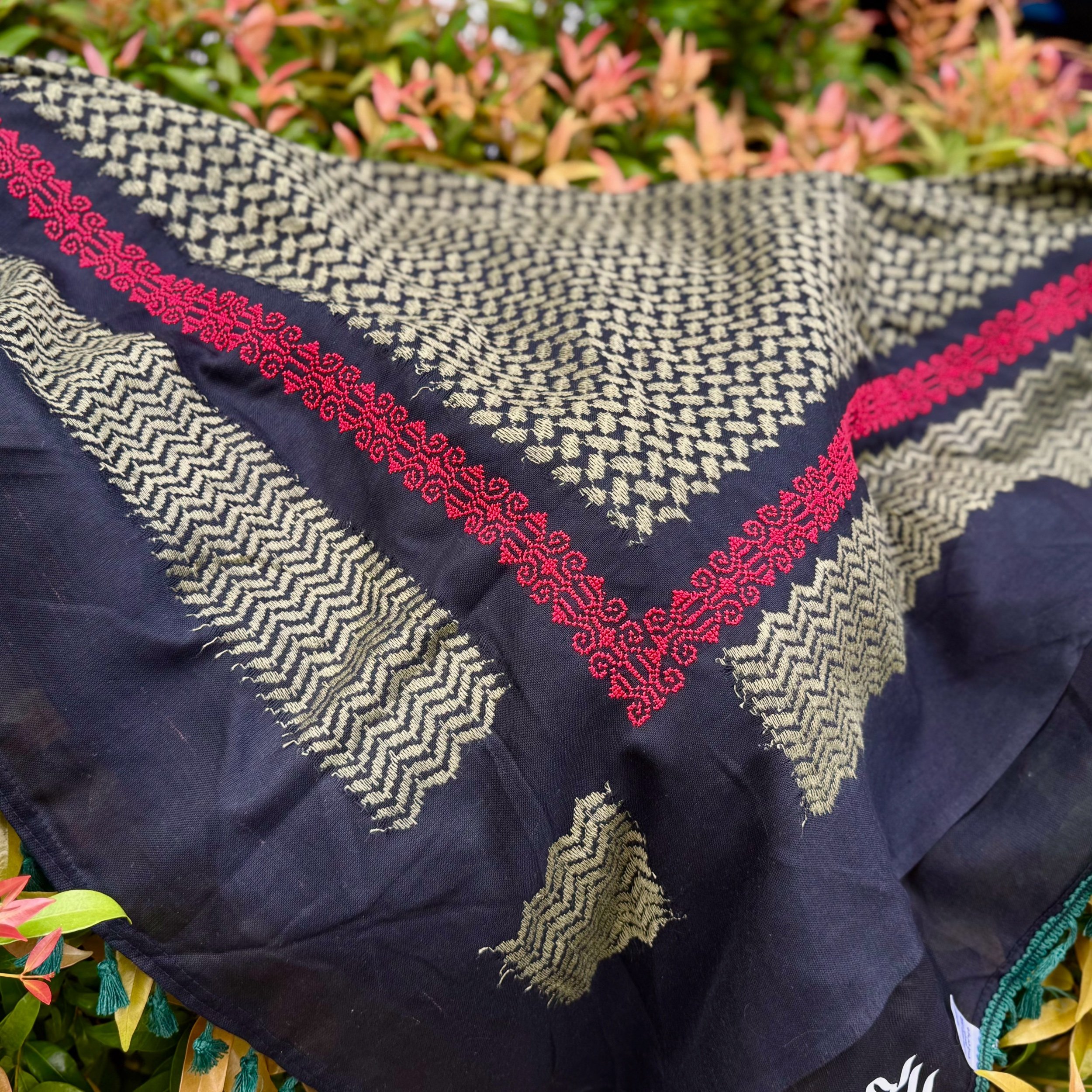
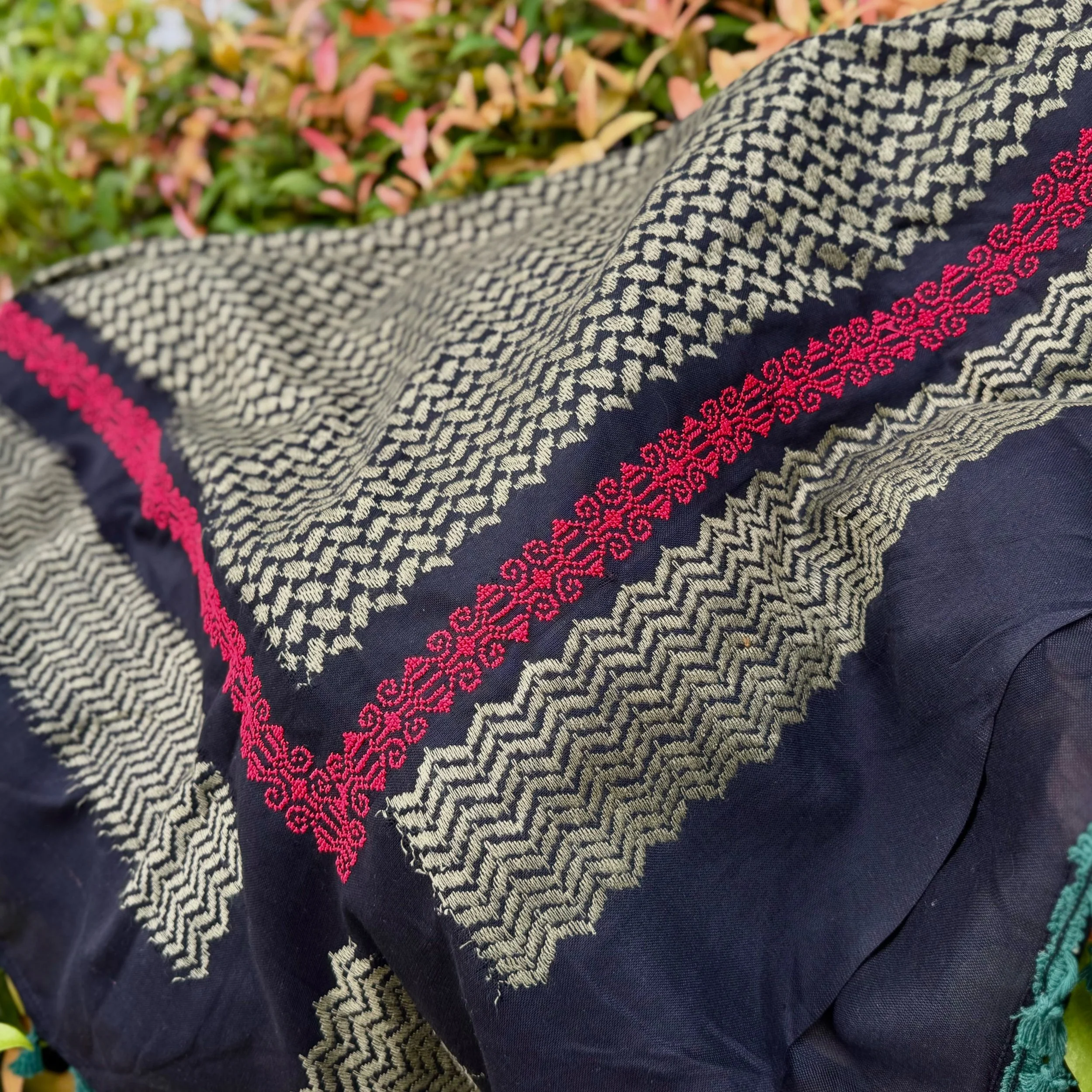
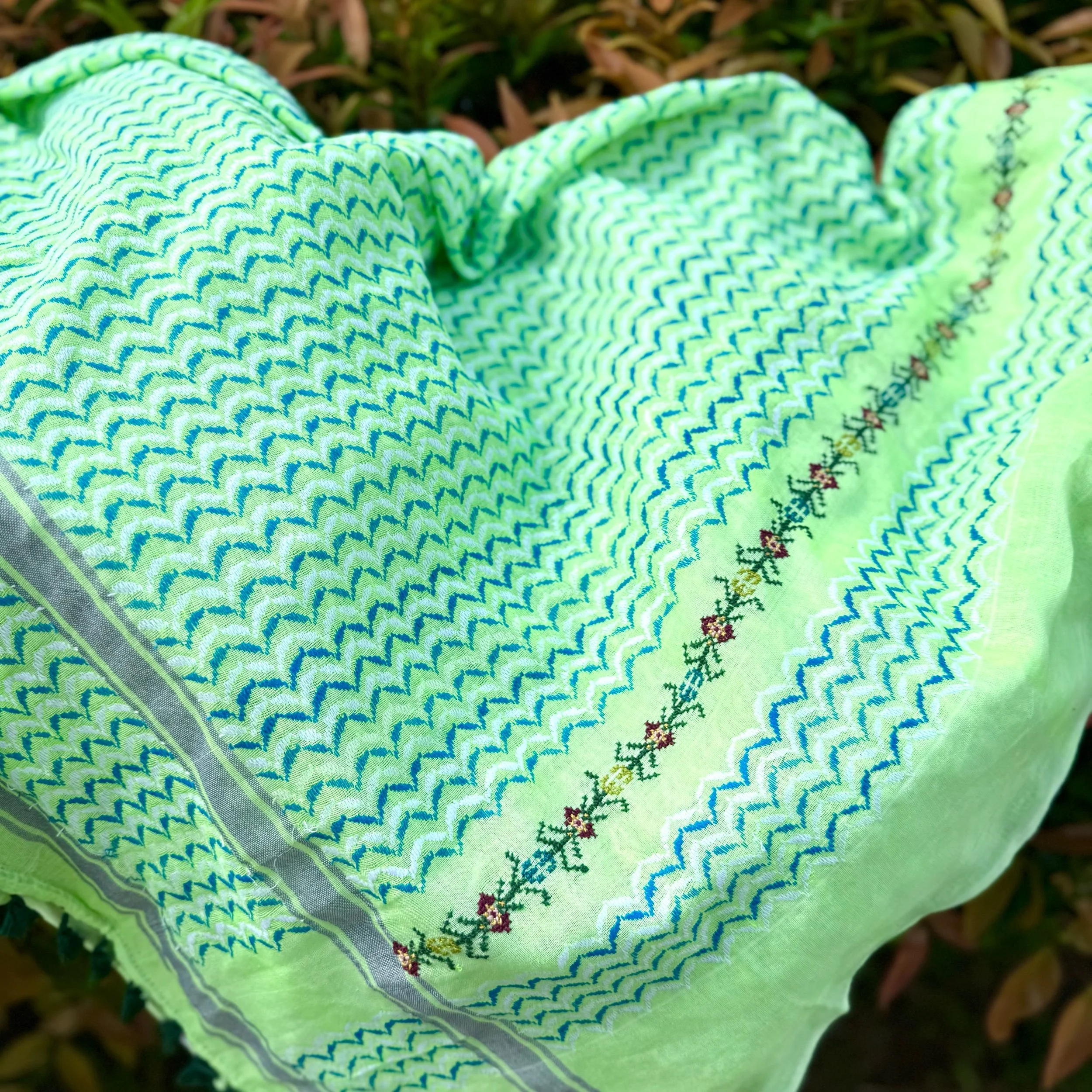
Kuffiya is made by the infamous Hirbawi Factory by Yaseer Hirbawi in Al-Khalil, Palestine.
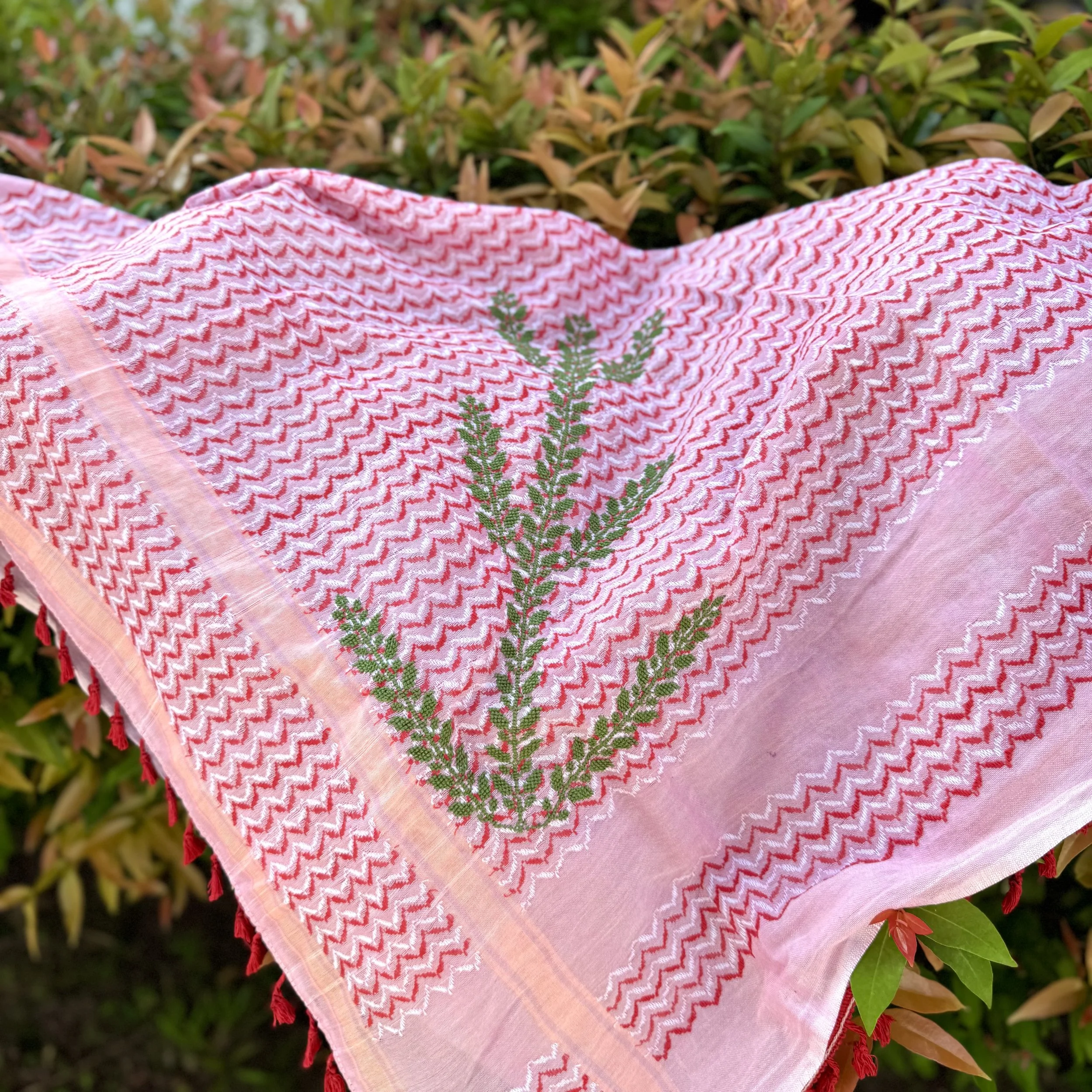
Gundelia Tatreez motif by Sherren Quattineh:
Stitched by Darzet Thoub Ladies - H2 Communities of Al-Khalil
For countless generations, Palestinians foraged and harvested the fruits of their land, from Wild plants like tumble thistle (Akkoub), medicinal thyme (Za'atar), and wild sage (Meramieh) to cultivated staples like olives, oranges, and watermelons.
Like all other facets of their lives, their autonomy over their own food is under occupation. In addition to confiscating farmlands and uprooting centuries-old fruit trees, the occupation imposes oppressive laws forbidding Palestinians from picking and growing the plants that comprise their culinary, medicinal, and cultural traditions.
Despite this, Palestinians continue to find ways to resist. Each tatreez motif documents a “Forbidden Plant of Palestine” carrying a story of connection and resilience, offering a reminder of the enduring bond between the people and the land that nurtures them.
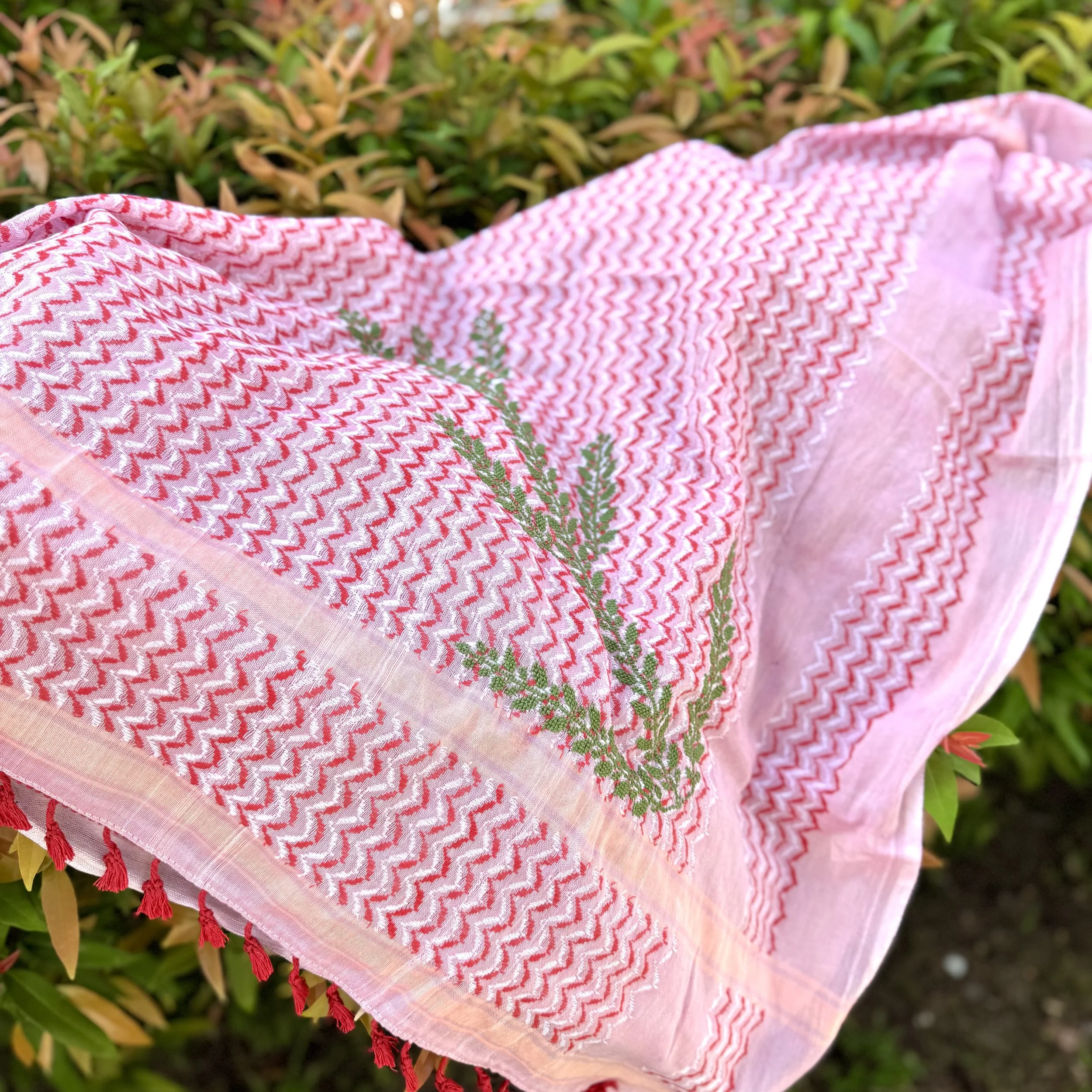
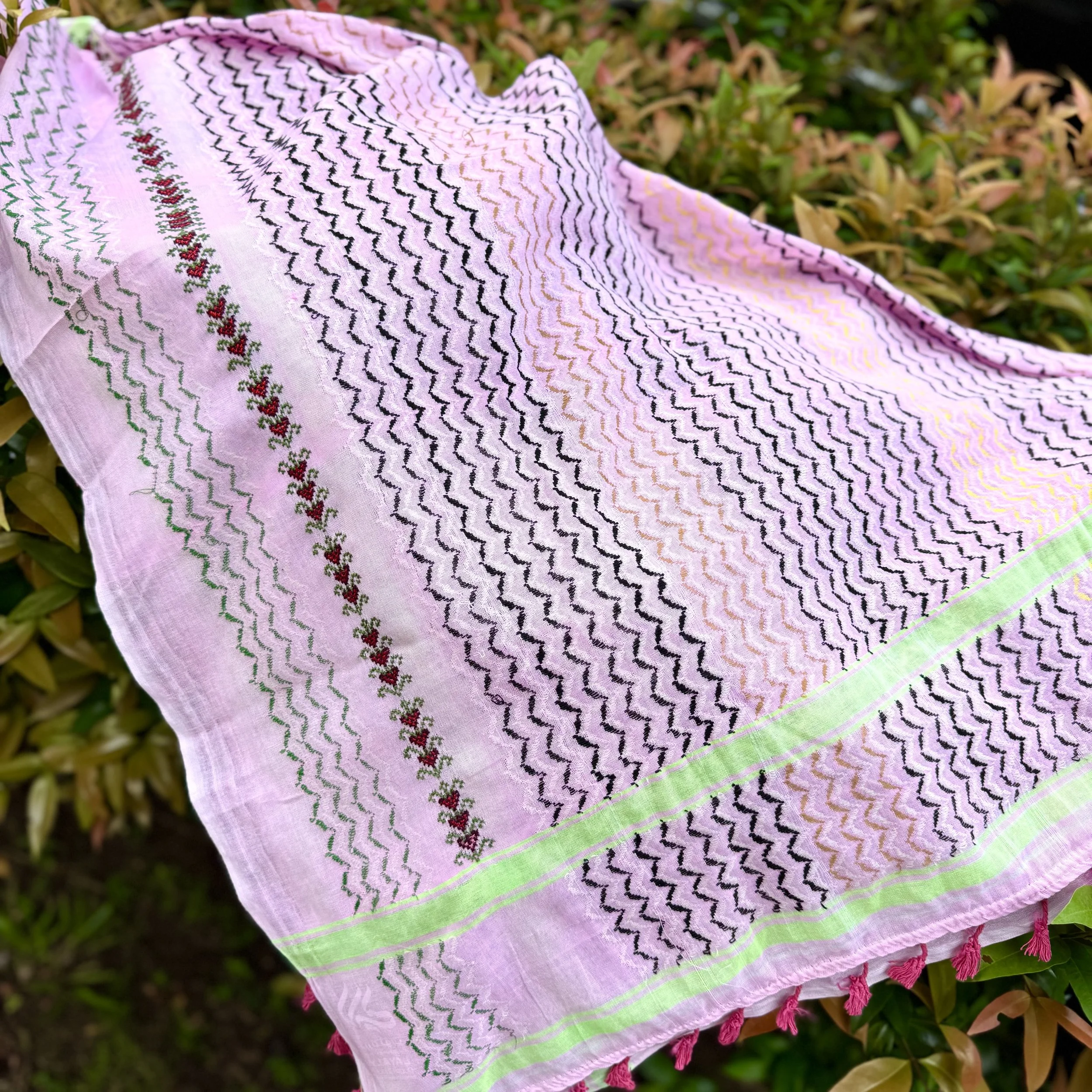
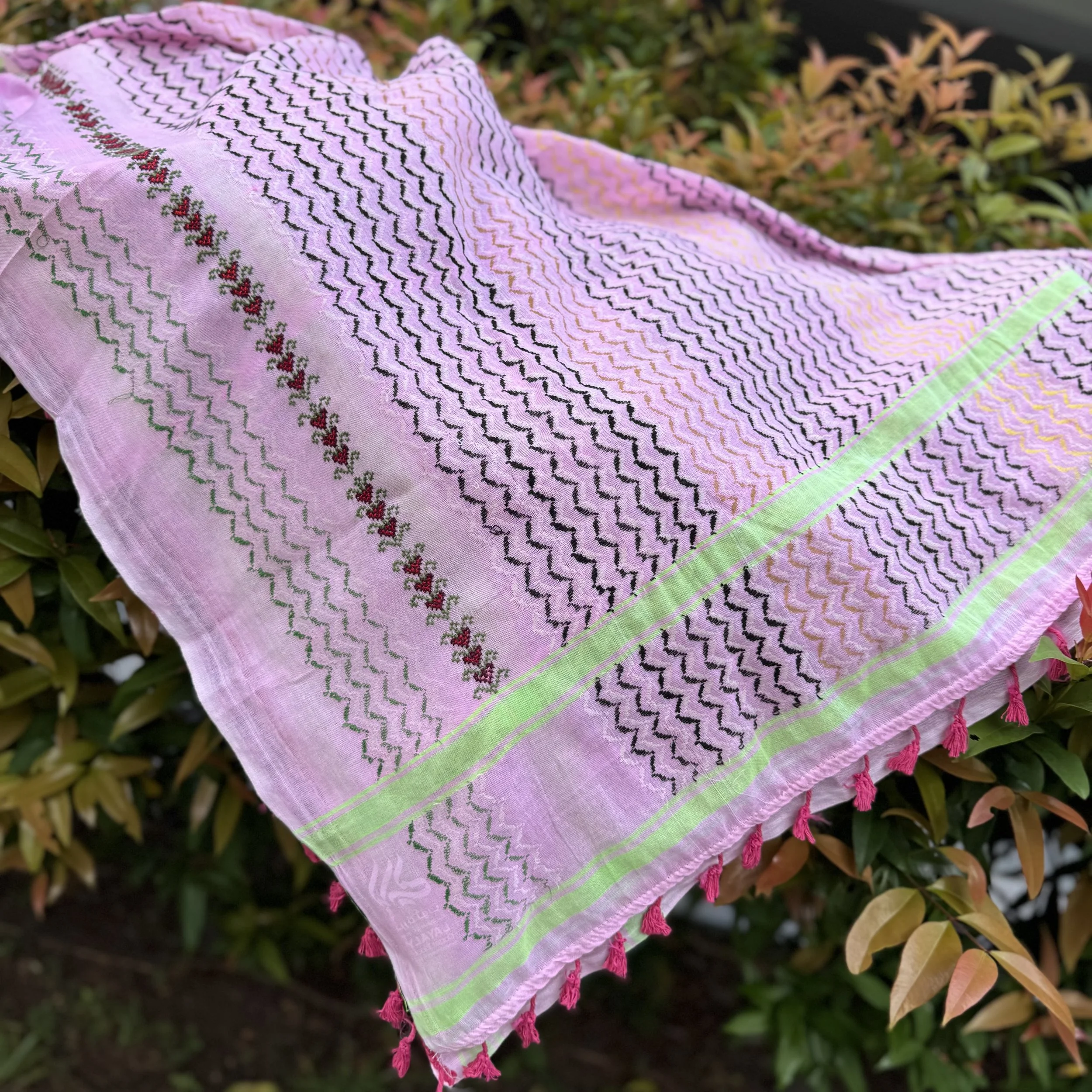
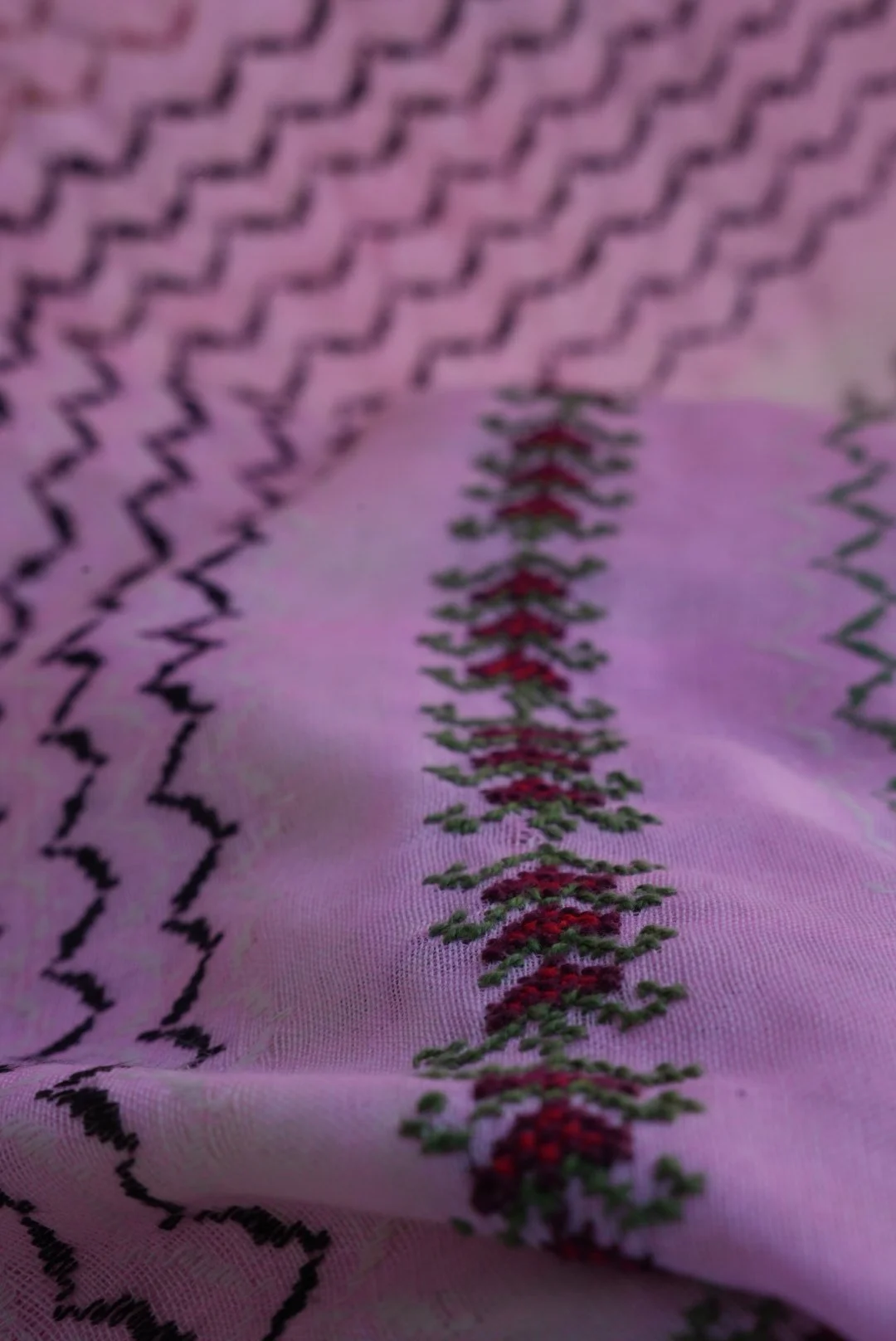
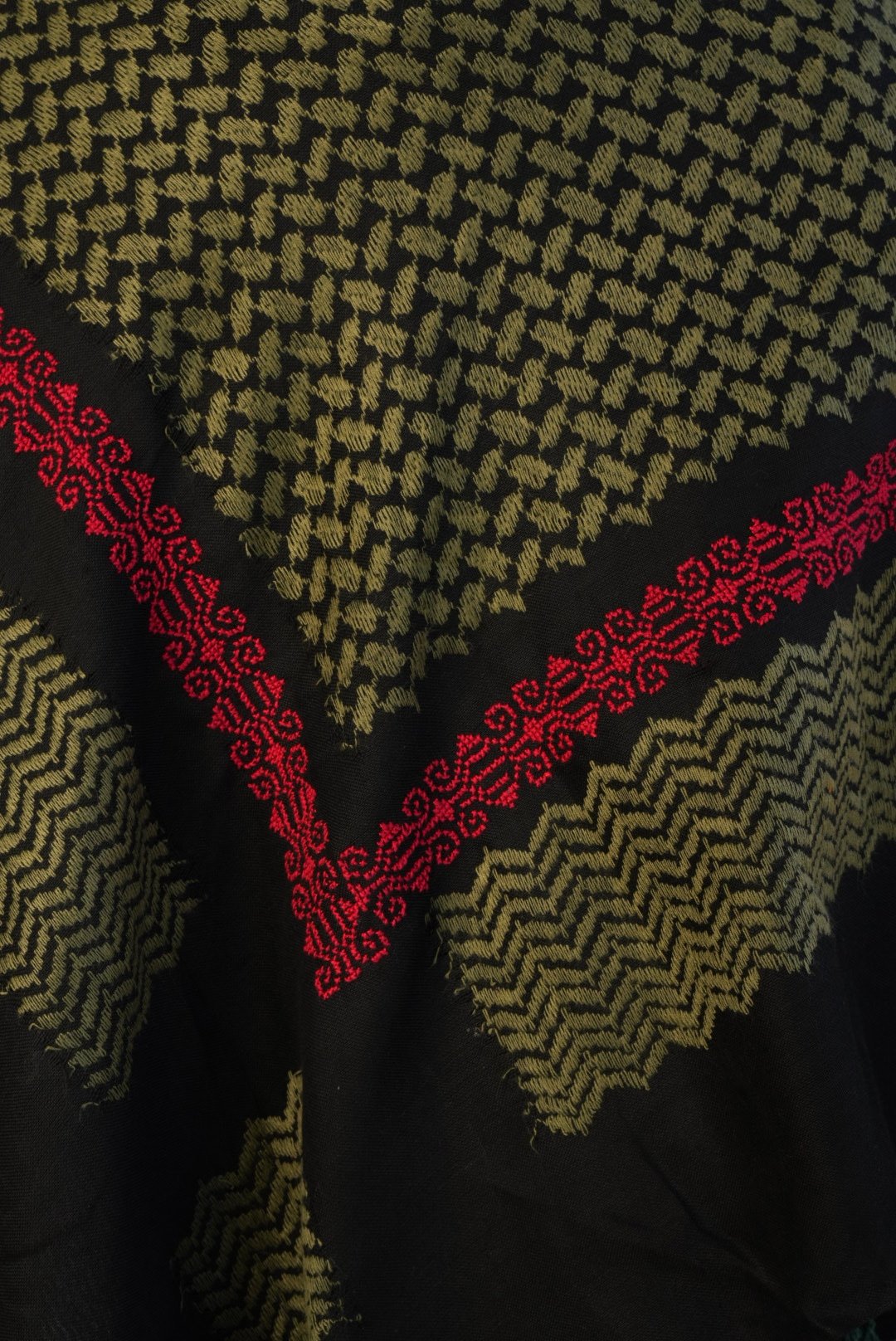
Sheikh Jarrah Kuffiya By Hirbawi:
The green threads of the Sheikh Jarrah (الشيخ جراح) kufiya represent the deep roots of the Palestinian families who have lived in this Jerusalem neighborhood for generations, building homes, raising families, and creating a community that has stood the test of time. Against all odds, the families of the Sheikh Jarrah neighborhood gained international attention when they stood up against sinister efforts by Israeli authorities to evict them from their homes. This kufiya is imbued with hope and solidarity for the residents of Sheikh Jarrah, serving as a conversation starter to prevent their story from falling into oblivion.
Kuffiya is made by the infamous Hirbawi Factory by Yaseer Hirbawi in Al-Khalil, Palestine.
Gundelia Tatreez motif by Sherren Quattineh:
Stitched by Darzet Thoub Ladies - H2 Communities of Al-Khalil
For countless generations, Palestinians foraged and harvested the fruits of their land, from Wild plants like tumble thistle (Akkoub), medicinal thyme (Za'atar), and wild sage (Meramieh) to cultivated staples like olives, oranges, and watermelons.
Like all other facets of their lives, their autonomy over their own food is under occupation. In addition to confiscating farmlands and uprooting centuries-old fruit trees, the occupation imposes oppressive laws forbidding Palestinians from picking and growing the plants that comprise their culinary, medicinal, and cultural traditions.
Despite this, Palestinians continue to find ways to resist. Each tatreez motif documents a “Forbidden Plant of Palestine” carrying a story of connection and resilience, offering a reminder of the enduring bond between the people and the land that nurtures them.
Sheikh Jarrah Kuffiya By Hirbawi:
The green threads of the Sheikh Jarrah (الشيخ جراح) kufiya represent the deep roots of the Palestinian families who have lived in this Jerusalem neighborhood for generations, building homes, raising families, and creating a community that has stood the test of time. Against all odds, the families of the Sheikh Jarrah neighborhood gained international attention when they stood up against sinister efforts by Israeli authorities to evict them from their homes. This kufiya is imbued with hope and solidarity for the residents of Sheikh Jarrah, serving as a conversation starter to prevent their story from falling into oblivion.